
Showing posts with label Marcus Audens. Show all posts
Showing posts with label Marcus Audens. Show all posts
Saturday, February 2, 2019
Origin of the Nova Britannia Flag
Apparently, one of the official flags of New England is a red flag with a pine tree on a white field in one corner.
This flag, called the "Bunker Hill Flag" is clearly the inspiration behind our own Nova Britannia flag.
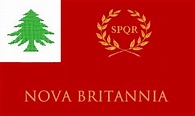 Marcus Audens must have used his extensive knowledge of the American Revolution when designing our local emblem - an interesting and appropriate connection.

Saturday, December 22, 2018
After Action Report: Saturnalia 2018
Saturday, December 22nd, 2018
Participants:
Sibylla Ambrosia Fulvia (Hostess)
Marcus Quintius Clavus
Marcus Cassius Julianus
Gaius Claudius Quadratus
Aulus Iulius Paterculus
Phone-in Participant: Jonathan Sibley (Brother of Sibylla)
Quintius and I arrived by car a little after 10 a.m. Along the way, we had been talking about various topics, including the birth narratives of Jesus Christ, Alexander the Great, and Augustus. In this last case, I had argued that there was some plausibility to future greatness being forecast for the son of a prominent Roman, but Quintius pointed out that the Julii had not been one of the leading
families for some time by the time Octavian was born, although acknowledging that they were patricians.
Sibylla welcomed us into her home with coffee and tea; Cassius and Quadratus were already present. I handed out candles, a traditional Saturnalia gift. We sat at the dining room table and discussed, over our hot beverages, research that Quadratus had done some time ago showing that the four Minoan palaces on Crete were aligned to the same midpoint between Crete and the Libyan coast. Quintius commented that modern people still do not give the ancients enough credit for what they were able to figure out; on the other hand, he stated that certain people underestimated the currency of superstition during ancient times. This kicked off a short discussion of superstition in general.
Quadratus gave everyone physical copies of the 2019 edition from his intensively researched Roman calendar. Quintius showed off a 2019 calendar he had created himself on Vistaprint, using art relating to Achilles, Patroclus, and Alexander from DeviantArt (an art sharing website where artists, visual mostly but also written, share their art). The two of them discussed the possibility of adding some of these professional-looking design features to Quadratus’s calendar in the future.
There followed a brief interlude. Quintius began cooking his dish (a savillum/Roman cheesecake) in the kitchen. The rest of us helped set a bedframe back in order, after which Sibylla showed off her home library and Cassius discussed with Quadratus the minting of new Roman-style coins.
We then retired to the living room for a while. Sibylla lit the hearth, using a Cape Cod lighter. I did a short presentation on the women of early Rome (women who appeared in Livy’s Ab Urbe Condita from Lavinia to Lucretia). Quadratus asked about other notable women from the end of this time to Cornelia mother of the Gracchi. I mentioned Cloelia, who was given as a hostage to the Etruscan king Lars Porsenna and managed to escape, winning such respect from the king in the
process that he voluntarily released half his captives. Since Cloelia is a gens name, we checked on the Album Civium to see whether there were any Cloelii in Nova Roma - there were not, although it was an option on the list of gentes. (Future citizens take note - you could be the first to take up this famous name, present on the Senate rolls since the conquest of Alba Longa!)
There followed a discussion of activities that we could undertake in the coming year. We considered the proposal for a volunteerism-oriented event which had been raised online. Cassius
argued that many groups were too quick to embrace causes other than their own, leaving no one to defend their original mission. However, he did speak in favor of activity which had both a Roman and charitable dimension. Quadratus mentioned the assistance of homeless veterans as one that we might adopt. The overall consensus was in favor, but that the details still needed work.
We returned to the dining room for the feast. We lit one of the small candles before each of us and one of the two tapers in the middle of the table at the start of the meal. Statues of the Leontocephalus and either Bacchus (with grapes held high) or Attis (judging from his garb) were placed at the head of the table; Cassius said a short grace. Sibylla had prepared roast rabbit with mushrooms in a cream sauce. Quintius had brought pesto parmesan bread and fine Greek wine. We also had olives, olive bread, and stuffed grape leaves.
After the main part of lunch we had dessert: globuli (balls of curd cheese fried and rolled in honey) which I had made, as well as the savillum made by Quintius, fresh from the oven. The savillum was quite different from the version we had eaten on a prior occasion (although at least as good); its texture was soft, almost like a bread pudding, its flavor was extremely sweet, and it was topped with poppy seeds which added an interesting variation to both.
Sibylla laid a collection of ancient artifacts which she had purchased on the table for display.
Still at the table, Quintius gave a presentation on the various confrontations between the Roman army and Macedonian-style phalanxes, running from the Pyrrhic War to the defeat of Perseus. In addition to describing the equipment and fighting style of the Macedonians, Quintius outlined some of the history of the wars involved and developments in the Roman army itself, particularly the cavalry. Sibylla shared some illustrations of Roman cavalry running down enemy
soldiers just as Quintius described and Quadratus told us that this was a common motif on coins beginning with Constantius II.
Sibylla’s brother Jonathan, who is very knowledgeable about pipe organs, and owns a 3 manual Wurlitzer, called in and shared with us a fact about pipe organs (also known as hydrauli): that they had been banned in Calvinist England because organ music had accompanied the execution of Christians in the arena. This started a conversation about music both ancient and modern, to which Cassius contributed by finding the music of a reconstructed Roman organ on the internet.
We had another discussion about organizational issues. Planning for the tasks ahead of us naturally lead to thoughts of the extremely valued member lost this year, Marcus Minucius Audens (James Matthews), who would have been the first to pitch in had he still been present.
We paused to dedicate a toast to him.
The continuing planning session took a lively turn when a list of citizens, which Quadratus had out to note information for Quintius, caught fire. Quadratus assured us that any ill omen involved was nullified by the very positive omen that we had all survived.
We ended the night by playing the free printable version of Card-Tamen, a game invented by Classicists as an educational tool. In keeping with the holiday, we worked out a method of playing for chocolate coins.
After Action Report drafted by A. Iulius Paterculus, with additions and corrections by Sibylla Ambrosia Fulvia and Marcus Quintius Clavus
Participants:
Sibylla Ambrosia Fulvia (Hostess)
Marcus Quintius Clavus
Marcus Cassius Julianus
Gaius Claudius Quadratus
Aulus Iulius Paterculus
Phone-in Participant: Jonathan Sibley (Brother of Sibylla)
Quintius and I arrived by car a little after 10 a.m. Along the way, we had been talking about various topics, including the birth narratives of Jesus Christ, Alexander the Great, and Augustus. In this last case, I had argued that there was some plausibility to future greatness being forecast for the son of a prominent Roman, but Quintius pointed out that the Julii had not been one of the leading
families for some time by the time Octavian was born, although acknowledging that they were patricians.
Sibylla welcomed us into her home with coffee and tea; Cassius and Quadratus were already present. I handed out candles, a traditional Saturnalia gift. We sat at the dining room table and discussed, over our hot beverages, research that Quadratus had done some time ago showing that the four Minoan palaces on Crete were aligned to the same midpoint between Crete and the Libyan coast. Quintius commented that modern people still do not give the ancients enough credit for what they were able to figure out; on the other hand, he stated that certain people underestimated the currency of superstition during ancient times. This kicked off a short discussion of superstition in general.
Quadratus gave everyone physical copies of the 2019 edition from his intensively researched Roman calendar. Quintius showed off a 2019 calendar he had created himself on Vistaprint, using art relating to Achilles, Patroclus, and Alexander from DeviantArt (an art sharing website where artists, visual mostly but also written, share their art). The two of them discussed the possibility of adding some of these professional-looking design features to Quadratus’s calendar in the future.
There followed a brief interlude. Quintius began cooking his dish (a savillum/Roman cheesecake) in the kitchen. The rest of us helped set a bedframe back in order, after which Sibylla showed off her home library and Cassius discussed with Quadratus the minting of new Roman-style coins.
We then retired to the living room for a while. Sibylla lit the hearth, using a Cape Cod lighter. I did a short presentation on the women of early Rome (women who appeared in Livy’s Ab Urbe Condita from Lavinia to Lucretia). Quadratus asked about other notable women from the end of this time to Cornelia mother of the Gracchi. I mentioned Cloelia, who was given as a hostage to the Etruscan king Lars Porsenna and managed to escape, winning such respect from the king in the
process that he voluntarily released half his captives. Since Cloelia is a gens name, we checked on the Album Civium to see whether there were any Cloelii in Nova Roma - there were not, although it was an option on the list of gentes. (Future citizens take note - you could be the first to take up this famous name, present on the Senate rolls since the conquest of Alba Longa!)
There followed a discussion of activities that we could undertake in the coming year. We considered the proposal for a volunteerism-oriented event which had been raised online. Cassius
argued that many groups were too quick to embrace causes other than their own, leaving no one to defend their original mission. However, he did speak in favor of activity which had both a Roman and charitable dimension. Quadratus mentioned the assistance of homeless veterans as one that we might adopt. The overall consensus was in favor, but that the details still needed work.
We returned to the dining room for the feast. We lit one of the small candles before each of us and one of the two tapers in the middle of the table at the start of the meal. Statues of the Leontocephalus and either Bacchus (with grapes held high) or Attis (judging from his garb) were placed at the head of the table; Cassius said a short grace. Sibylla had prepared roast rabbit with mushrooms in a cream sauce. Quintius had brought pesto parmesan bread and fine Greek wine. We also had olives, olive bread, and stuffed grape leaves.
After the main part of lunch we had dessert: globuli (balls of curd cheese fried and rolled in honey) which I had made, as well as the savillum made by Quintius, fresh from the oven. The savillum was quite different from the version we had eaten on a prior occasion (although at least as good); its texture was soft, almost like a bread pudding, its flavor was extremely sweet, and it was topped with poppy seeds which added an interesting variation to both.
Sibylla laid a collection of ancient artifacts which she had purchased on the table for display.
Still at the table, Quintius gave a presentation on the various confrontations between the Roman army and Macedonian-style phalanxes, running from the Pyrrhic War to the defeat of Perseus. In addition to describing the equipment and fighting style of the Macedonians, Quintius outlined some of the history of the wars involved and developments in the Roman army itself, particularly the cavalry. Sibylla shared some illustrations of Roman cavalry running down enemy
soldiers just as Quintius described and Quadratus told us that this was a common motif on coins beginning with Constantius II.
Sibylla’s brother Jonathan, who is very knowledgeable about pipe organs, and owns a 3 manual Wurlitzer, called in and shared with us a fact about pipe organs (also known as hydrauli): that they had been banned in Calvinist England because organ music had accompanied the execution of Christians in the arena. This started a conversation about music both ancient and modern, to which Cassius contributed by finding the music of a reconstructed Roman organ on the internet.
We had another discussion about organizational issues. Planning for the tasks ahead of us naturally lead to thoughts of the extremely valued member lost this year, Marcus Minucius Audens (James Matthews), who would have been the first to pitch in had he still been present.
We paused to dedicate a toast to him.
The continuing planning session took a lively turn when a list of citizens, which Quadratus had out to note information for Quintius, caught fire. Quadratus assured us that any ill omen involved was nullified by the very positive omen that we had all survived.
We ended the night by playing the free printable version of Card-Tamen, a game invented by Classicists as an educational tool. In keeping with the holiday, we worked out a method of playing for chocolate coins.
After Action Report drafted by A. Iulius Paterculus, with additions and corrections by Sibylla Ambrosia Fulvia and Marcus Quintius Clavus
Saturday, June 23, 2018
Roman Day 2018
Marcus Audens has written up the following minutes for a meeting taking place in Nova Britannia. A few minor modifications have been made by me based on comments made by Sibylla A. Fulvia and myself on the draft sent by M. Audens:
Pictures and Minutes - The Roman Day's Event was held at the Home of Sibylla A. Fulvia in Haddam, CT.
Purpose of the Meeting was Roman Presentations , and a discussion on Nova Britannia Business.
Lady Sibylla A. Fulvia was the hostess.
Attendees were:
- Lady Sibylla A. Fulvia;
- Lady Valentina
- Lady Mathews (visitor);
- Senator Marcus Cassius Julianus;
- Master Paterculus;
- Consul Gaius Claudius Quadratus;
- Optio, Quintius Johanson, Legio III (Cyrenaica);
- Home Owner,Nelson Struck (visitor);
- Senator Marcus Minucius Audens.
The Meeting was brought to order at about 10:00 A.M. and the first Presentation given by Master Paterculus, its subject being the Greek Philosophy of Plato's "Republic". His presentation was to present to the members the factors of the Greek Philosopher Plato in regard to the philosophy of complete control of all phases and activities of normal like by an all-powerful ruler, and gain from those present their views and ideas about such a government.
The second presentation was provided by Senator /NR Co-Founder Marcus Cassius Julianus. His presentation was entitled "The Kingdom of Soissons." Handouts of the historical information regarding the subject were distributed to all present (See https://en.wikipedia.org/wiki/Kingdom_of_Soissons).
The third Presentation was concerning a large variety of spices. Lady Sibylla A. Fulvia had a large container of each spice , and she passed each spice around the group for anyone to smell and taste as desired while the lady gave the details about how the spice was used, the origin, and other useful information about each spice.
The fourth Presentation was given by Senator Marcus Audens entitled "Ancient/Medieval Maritime Merchant Routes and Ships." The presentation was accompanied by fifteen of the presenter's ship drawings , and five maps showing maritime merchant routes. The presentation encompassed ship styles, ship sail rigs, hull construction, and primary use of various style of ships in different marine settings and places.
The fifth presentation was by Consul Quadratus about his coin collection from two distinct Roman periods; 1. The Second Triumvirate; 2. The Year of the Twelve Caesars.
The sixth Presentation was by Lady Sibylla A. Fulvia and was entitled, "Leonotcephalus, and how Mithras was sent in a meteorite to a lower plane," The presentation was in regard to the God Mithras, and the showing of a statuette of his messenger from Heaven to Earth, by using a key to unlock the celestial globe, and allow Mithras to pass through encased in a meteor in order to reach earth. The presentation included details and other lesser Gods and goddesses and their participation in the religous story of Mithras.
There was also a display, of Roman Coins and artifacts provided for viewing by Senator Marcus Cassius.
Following the first few Presentations the group was called to a very nice Roman Dinner, which featured Roast Chicken, Olives, Figs, Apricots, Loaf Bread, Garbanzo Bean/Pomegranate Salad, Deviled Eggs, Ancient Roman Cheese Cake, Lemonade, and Red Wine.
Following the last presentation the group came to the discussion period. The first item brought by Consul Quadratus, was the desire to conduct some kind of quiz on the NR Communication network. The problem was that any simple quiz questions regarding the Roman Republic and Early Empire would be easily answered using one of the Computer answering services (Wiki, Google, etc.) The question regarding the quiz, recieved one answer from Marcus Audens. The contest would be to write the ending to one of several one page stories. The best ending would be the winner! Other suggestions included writing an essay or short story as a team.
This discussion evolved into the question about what is needed if anyone in Nova Britannia wished to create a Roman Event. After some discussion a simple set of suggested requirements for putting together an event, These requirements were studied, questioned, adjusted, and finally voted upon and accepted unanimously. It was strongly suggested that the subject of any quiz or contest be limited to a High school level of information, and that the set of suggested requirements should be sent to the NR Communication network on a cycle of somewhere in the vicinity of a three-to six month period. This list of requirements will be furnished for the Event minutes review By Senator Marcus Cassius.
The pictures of the event are as follow:

1. Consul Quadratus and Lady Sibylla A. Fulvia;

2. Paterculus, Lady Sibylla A. Fulvia, Nelson Struck (Home Owner/Guest), Optio, Quintius Johanson, Legio III (Cyrenaica);

3. Paterculus, Optio, Quintius Johanson, Legio III (Cyrenaica);

4. Lady Sibylla A. Fulvia, Consul Quadratus, Senator Marcus Cassius, Paterculus;

5. Lady Sibylla A. Fulvia, Lady Valentina, Paterculus, Marcus Audens;

6. Lady Sibylla A. Fulvia, Consul Quadratus;

7. Statuette - Leontocephalus;

8. Senator Marcus Cassius.
Respectfully Submitted.
Marcus Audens
Pictures and Minutes - The Roman Day's Event was held at the Home of Sibylla A. Fulvia in Haddam, CT.
Purpose of the Meeting was Roman Presentations , and a discussion on Nova Britannia Business.
Lady Sibylla A. Fulvia was the hostess.
Attendees were:
- Lady Sibylla A. Fulvia;
- Lady Valentina
- Lady Mathews (visitor);
- Senator Marcus Cassius Julianus;
- Master Paterculus;
- Consul Gaius Claudius Quadratus;
- Optio, Quintius Johanson, Legio III (Cyrenaica);
- Home Owner,Nelson Struck (visitor);
- Senator Marcus Minucius Audens.
The Meeting was brought to order at about 10:00 A.M. and the first Presentation given by Master Paterculus, its subject being the Greek Philosophy of Plato's "Republic". His presentation was to present to the members the factors of the Greek Philosopher Plato in regard to the philosophy of complete control of all phases and activities of normal like by an all-powerful ruler, and gain from those present their views and ideas about such a government.
The second presentation was provided by Senator /NR Co-Founder Marcus Cassius Julianus. His presentation was entitled "The Kingdom of Soissons." Handouts of the historical information regarding the subject were distributed to all present (See https://en.wikipedia.org/wiki/Kingdom_of_Soissons).
The third Presentation was concerning a large variety of spices. Lady Sibylla A. Fulvia had a large container of each spice , and she passed each spice around the group for anyone to smell and taste as desired while the lady gave the details about how the spice was used, the origin, and other useful information about each spice.
The fourth Presentation was given by Senator Marcus Audens entitled "Ancient/Medieval Maritime Merchant Routes and Ships." The presentation was accompanied by fifteen of the presenter's ship drawings , and five maps showing maritime merchant routes. The presentation encompassed ship styles, ship sail rigs, hull construction, and primary use of various style of ships in different marine settings and places.
The fifth presentation was by Consul Quadratus about his coin collection from two distinct Roman periods; 1. The Second Triumvirate; 2. The Year of the Twelve Caesars.
The sixth Presentation was by Lady Sibylla A. Fulvia and was entitled, "Leonotcephalus, and how Mithras was sent in a meteorite to a lower plane," The presentation was in regard to the God Mithras, and the showing of a statuette of his messenger from Heaven to Earth, by using a key to unlock the celestial globe, and allow Mithras to pass through encased in a meteor in order to reach earth. The presentation included details and other lesser Gods and goddesses and their participation in the religous story of Mithras.
There was also a display, of Roman Coins and artifacts provided for viewing by Senator Marcus Cassius.
Following the first few Presentations the group was called to a very nice Roman Dinner, which featured Roast Chicken, Olives, Figs, Apricots, Loaf Bread, Garbanzo Bean/Pomegranate Salad, Deviled Eggs, Ancient Roman Cheese Cake, Lemonade, and Red Wine.
Following the last presentation the group came to the discussion period. The first item brought by Consul Quadratus, was the desire to conduct some kind of quiz on the NR Communication network. The problem was that any simple quiz questions regarding the Roman Republic and Early Empire would be easily answered using one of the Computer answering services (Wiki, Google, etc.) The question regarding the quiz, recieved one answer from Marcus Audens. The contest would be to write the ending to one of several one page stories. The best ending would be the winner! Other suggestions included writing an essay or short story as a team.
This discussion evolved into the question about what is needed if anyone in Nova Britannia wished to create a Roman Event. After some discussion a simple set of suggested requirements for putting together an event, These requirements were studied, questioned, adjusted, and finally voted upon and accepted unanimously. It was strongly suggested that the subject of any quiz or contest be limited to a High school level of information, and that the set of suggested requirements should be sent to the NR Communication network on a cycle of somewhere in the vicinity of a three-to six month period. This list of requirements will be furnished for the Event minutes review By Senator Marcus Cassius.
The pictures of the event are as follow:

1. Consul Quadratus and Lady Sibylla A. Fulvia;

2. Paterculus, Lady Sibylla A. Fulvia, Nelson Struck (Home Owner/Guest), Optio, Quintius Johanson, Legio III (Cyrenaica);

3. Paterculus, Optio, Quintius Johanson, Legio III (Cyrenaica);

4. Lady Sibylla A. Fulvia, Consul Quadratus, Senator Marcus Cassius, Paterculus;

5. Lady Sibylla A. Fulvia, Lady Valentina, Paterculus, Marcus Audens;

6. Lady Sibylla A. Fulvia, Consul Quadratus;

7. Statuette - Leontocephalus;

8. Senator Marcus Cassius.
Respectfully Submitted.
Marcus Audens
Sunday, January 14, 2018
Photos of Bread Making from Saturnalia 2017 Meeting
The pictures below were taken by Marcus Quintius Clavus during the early part of the meeting for Saturnalia 2017. They depict the process of making Roman bread according to the recipe later presented by Marcus Audens. Sibylla Ambrosia Fulvia is pictured kneading the dough.


Tuesday, January 9, 2018
After Action Report: Saturnalia 2017
>>>> Roman Days-Saturnalia/Presentation Event <<<<
>>> Provincia, Nova Britannia, Nova Roma (NR)
During a weekend this past month (Dec. 16-17, 2017) the Arthur Waite/Paterculus scheduled a Saturnalia/Presentation Event at the home of Lady Sibylla, a member of Nova Roma. On Saturday the attendees were: Lady Sibylla, Marcus Audens, Margaret Mathews, Paterculus, Quintius, and in the Evening, Andrew and Lisa Bell, and David Blasco with his grandson, and his guitar. On Sunday the attendees were Lady Sibylla, Marcus Audens, Margaret Mathews, and Paterculus.
On Saturday, we enjoyed a delicious Roman Dinner and this was followed by a presentation on "Roman Bread" by Marcus Audens, This presentation was accompanied at the meal with a loaf of Roman Bread made from the recipe provided on the Internet by Lady Sibylla. Both Paterculus and Lady Sibylla have copies if you desire the information, Following that, there was a very nice period of Music furnished by Mr. Blasco and his guitar, During this period, Paterculus and Marcus Audens attempted to create a poem that could be put to music. The result of that follows as taken down by the hands of Lady Sibylla:
The second Punic war was a rough war indeed.
Our evening friends, Andrew and Lisa, had to leave early for previous commitments, but the concert lasted until very nearly midnight.
On Saturday, We enjoyed a nice luncheon, and Paterculus entertained us with a discussion on Stoicism and the way to Meditate. Paterculus has the volume pertaining to this presentation and the exercise. Everyone tried it out, and then gave their impressions of what they would have done in a Stoic position. Very interesting application! Lady Sibylla followed that with a review of her earlier shipboard presentation on the very detailed elements of the birth of Mithras. Lady Sibylla has this information recorded on her computer and her research, into this area, is continuing. This was a very enlightening and informative message indeed! The final presentation was on the Roman Merchant and Military Shipping by Marcus Audens. The presentation was a short one, due to the need to depart for home. His references are in his Roman Library. However, later discussions, more in detail, on that subject, have been promised,
The table foods for the meals included Roman Bread which was very good, a barley/veggies/chicken/ beef soup, sliced baked ham and turkey (which we enjoyed in place of peacock), boiled eggs, a variety of olives, pickled stuffed grape leaves, fresh cheese, cheddar cheese, beer, wine, and for dessert, Eggnog and double chocolate cake.
There was a wooden target set up in the back yard for target throwing of knives, axes, spears, and arrows, however with the cold temperatures and snow, it was decided to leave that out of the event.
We wish to thank Lady Sibylla for the use of her home and lovely dining table from which we all ate our meals in comfort. A very nice fire in her fireplace went very well on such cold nights! Lady Sibylla had also prepared sleeping facilities for any guests wishing to sleep over, which was an extraordinary generous gesture.
Paterculus and his colleagues in Nova Britannia are currently in the process of working up a list of events for next year to be considered. Already scheduled is MithraCon (www.mithracon.org) which will be held on the weekend of April 6-8 in New Haven, CT. Sibylla, who founded and continues to organize this fine event writes:
>> Respectfully;
Marcus Minucius Audens/ Mr. James Matthews;
with feedback & approval from Sibylla Ambrosia Fulvia (Dr. Jane Sibley) & Aulus Iulius Paterculus (Arthur Waite)
Provincia, Nova Britannia;
Nova Roma (NR)
>>> Provincia, Nova Britannia, Nova Roma (NR)
During a weekend this past month (Dec. 16-17, 2017) the Arthur Waite/Paterculus scheduled a Saturnalia/Presentation Event at the home of Lady Sibylla, a member of Nova Roma. On Saturday the attendees were: Lady Sibylla, Marcus Audens, Margaret Mathews, Paterculus, Quintius, and in the Evening, Andrew and Lisa Bell, and David Blasco with his grandson, and his guitar. On Sunday the attendees were Lady Sibylla, Marcus Audens, Margaret Mathews, and Paterculus.
On Saturday, we enjoyed a delicious Roman Dinner and this was followed by a presentation on "Roman Bread" by Marcus Audens, This presentation was accompanied at the meal with a loaf of Roman Bread made from the recipe provided on the Internet by Lady Sibylla. Both Paterculus and Lady Sibylla have copies if you desire the information, Following that, there was a very nice period of Music furnished by Mr. Blasco and his guitar, During this period, Paterculus and Marcus Audens attempted to create a poem that could be put to music. The result of that follows as taken down by the hands of Lady Sibylla:
The second Punic war was a rough war indeed.
It went on many years, though they fought at great speed.
Romans and Carthage had a big gripe,
they fought and they fought till their anger was ripe.
Hamilcar knew that his fighting was done.
Still thirsting for vengeance, he turned to his son.
Took him to an alter and forced him to swear
to lay Rome to ruin and make Romans despair.
So Hannibal gathered some fierce pachyderms
to gain Carthage conquest on favorable terms.
However, he failed on his biggest effort
and the Romans won, while Hannie went to a port.
On Saturday, We enjoyed a nice luncheon, and Paterculus entertained us with a discussion on Stoicism and the way to Meditate. Paterculus has the volume pertaining to this presentation and the exercise. Everyone tried it out, and then gave their impressions of what they would have done in a Stoic position. Very interesting application! Lady Sibylla followed that with a review of her earlier shipboard presentation on the very detailed elements of the birth of Mithras. Lady Sibylla has this information recorded on her computer and her research, into this area, is continuing. This was a very enlightening and informative message indeed! The final presentation was on the Roman Merchant and Military Shipping by Marcus Audens. The presentation was a short one, due to the need to depart for home. His references are in his Roman Library. However, later discussions, more in detail, on that subject, have been promised,
The table foods for the meals included Roman Bread which was very good, a barley/veggies/chicken/ beef soup, sliced baked ham and turkey (which we enjoyed in place of peacock), boiled eggs, a variety of olives, pickled stuffed grape leaves, fresh cheese, cheddar cheese, beer, wine, and for dessert, Eggnog and double chocolate cake.
There was a wooden target set up in the back yard for target throwing of knives, axes, spears, and arrows, however with the cold temperatures and snow, it was decided to leave that out of the event.
We wish to thank Lady Sibylla for the use of her home and lovely dining table from which we all ate our meals in comfort. A very nice fire in her fireplace went very well on such cold nights! Lady Sibylla had also prepared sleeping facilities for any guests wishing to sleep over, which was an extraordinary generous gesture.
Paterculus and his colleagues in Nova Britannia are currently in the process of working up a list of events for next year to be considered. Already scheduled is MithraCon (www.mithracon.org) which will be held on the weekend of April 6-8 in New Haven, CT. Sibylla, who founded and continues to organize this fine event writes:
Our Saturday programming is spending the day at Yale University's Sterling Memorial Library doing research on whatever your heart desires, followed by a Roman potluck dinner in the hotel (which is within walking distance of the library). Sunday we visit the Dura Europos mithraeum cult niche at Yale's art gallery, as well as look at other period antiquities there.
>> Respectfully;
Marcus Minucius Audens/ Mr. James Matthews;
with feedback & approval from Sibylla Ambrosia Fulvia (Dr. Jane Sibley) & Aulus Iulius Paterculus (Arthur Waite)
Provincia, Nova Britannia;
Nova Roma (NR)
Friday, May 23, 2014
Nova Britannia Yahoo Group Restored!
Thanks to the tireless efforts of M. Minucius Audens, the Nova Roma yahoo group is working again. M. Audens has promised to keep the list active with some of his great articles on Roman studies. The group can be found here.
Thursday, March 20, 2014
Ides of March Meeting Highlights (Nova Britannia Ulterior)
1: 00 p.m. I found Marcus
Audens and Gnaeus Floccus by the door. They were meeting for the first time. We
discussed past experience within Nova Roma. Marcus Audens offered a suggestion
to send certificates of citizenship to those residents of Nova Britannia who
would like them. A similar program was well received in Sodalitas Militarum. M.
Audens gave me a stack of prototype certificates, mentioning they could be further
elaborated as desired. Computer issues were also discussed: M. Audens described
the issues of the Nova Britannia web list and the possible solutions he has
considered; Cn. Floccus mentions similar difficulty with modifying the wiki
page, which requires updating.
Once we got the agenda, we began with a short
presentation by M. Audens. This consisted of a description of several model
siege engines he is constructing, including one that can fire a dart several
yards!
The next point on our agenda was a discussion of the
Etruscans, which quickly wandered to Rome’s ability to apply ideas in
innovative ways, with the development of the arch being a key example. M.
Audens pointed at the evolution from fairly uneven early arches to what we know
today. Cn. Floccus mentioned
the dome as another derivative of the arch, and the senator described the
astonishing amount of weight a small model of the Pantheon was able to bear.
Next we began a round of trivia. Each of us took coming
up with obscure (or not so obscure) facts to question the others about. The
final score (by my informal count) was Audens – 3 ½, Floccus – 1 ½, Paterculus
– 1. This took us to about 2:30 p.m., over which time we also ordered
appetizers & drinks.
Following this, we offered a toast to Gaius Iulius
Caesar. Cn. Floccus joking added, “May he live long.”
We attempted to play tali using modern d4s and some rules
I had printed off the internet. The substitution seemed to go well, but we were
hampered by uncertainty of how to handle scoring or the number of rounds we
were to play. M. Audens mentioned that the neck of a turkey could be boiled to
create something resembling knucklebones.
Cn. Floccus mentioned that he is a Latin teacher and
currently studying Catullus. M. Audens mentioned some reading of Vegitus, Frontinus, Vitruvius, and Julius Caesar. We had already spoken
about architecture, but we did talk somewhat about neoclassical architecture,
both in Coventry and Ledyard, as well as around the world.
We discussed the potential for a Make-&-Mend meeting
such as M. Audens had suggested in the past, as well as the problem of
distance. Cn. Floccus accepted the challenge of organizing activity in
Massachusetts and expressed some interest in Legio II Cyrenaica.
I left in some haste at 3 p.m., leaving behind all the
money I’d brought for my share of the bill, which was not entirely covered.
Subscribe to:
Posts (Atom)